Does Spelling Still Matter in School Anymore?
Autocorrect fixes your typos before you've finished them, so it's fair to wonder whether spelling is still worth a child's effort. It is, and not for the reasons you'd expect: spelling quietly props up reading, writing and confidence, and the technology that seems to replace it actually leans on it.
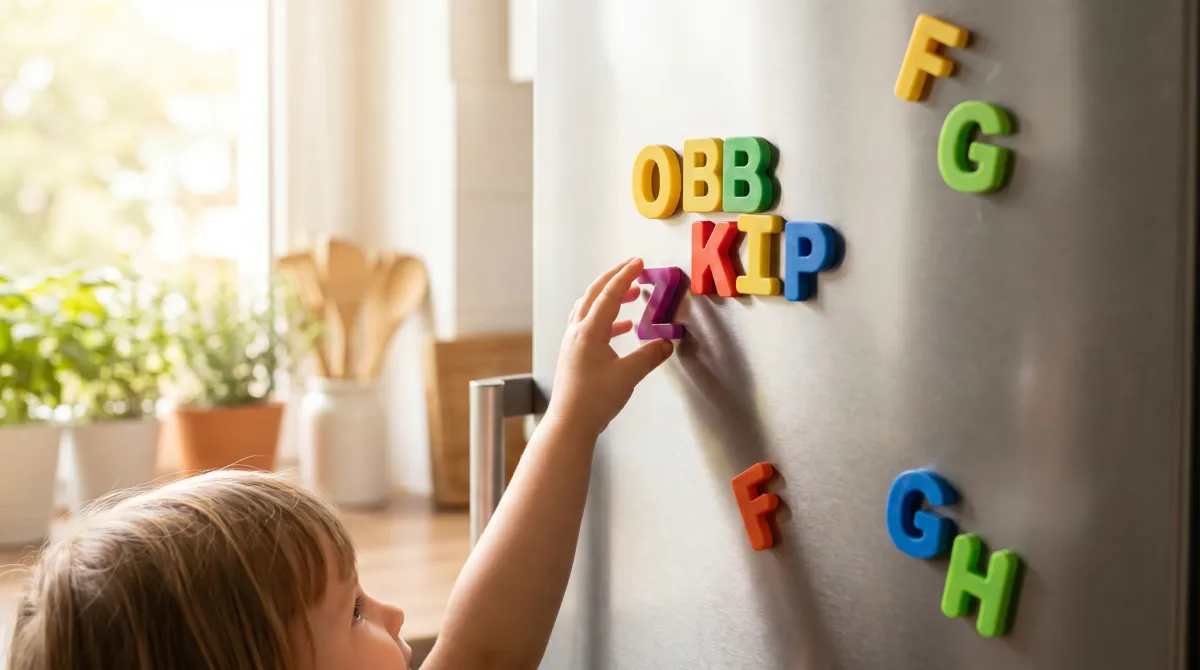
Your phone fixes your typos before you've finished them. Autocorrect, predictive text and AI writing tools have made it easy to wonder whether spelling is a skill worth a child's effort at all. If a machine catches the mistakes, why spend Year 3 learning the difference between their and there?
It's a fair question, and the honest answer is that spelling matters more than the autocorrect era makes it look. Not because of tradition or neatness, but because of what spelling does for the rest of a child's reading and writing. The technology that seems to replace it actually leans on it.
Doesn't autocorrect make spelling obsolete?
Spellcheck is good at one narrow thing: catching a word that isn't a real word. What it can't catch is the wrong real word sitting in a plausible-looking place. A genuine homophone like their for there, or a slip like form for from or defiantly for definitely, sails straight through, because every one of those is spelled perfectly. It just isn't the word the child meant.
That gap matters because so many of children's spelling errors are exactly this kind: real words in the wrong place. To use autocorrect well a child still has to know which suggestion is right, and predictive text confidently offers wrong words all the time. A child who can't spell isn't freed by the technology. If anything, they're at its mercy. And none of it helps in the situations that still count most at primary: writing by hand, in an exercise book, in a test.
What does spelling do for reading and writing?
This is the part that gets missed. Spelling isn't a separate, decorative skill bolted on to writing. It's woven into how children learn to read and how well they can write, and the three grow together.
Reading and spelling pull on the same knowledge. When a child works out how a word is built from its sounds and letters, that same knowledge helps them recognise the word instantly next time they read it. Strong spellers tend to be strong readers, because both rest on the same foundation. We've explained how that works in the science of spelling, but the short version is that spelling and reading reinforce each other rather than competing for a child's time.
Writing is where it shows up most clearly. When spelling is automatic, a child can pour their attention into what they want to say. When every other word is a struggle, that effort gets swallowed by the mechanics, and the ideas, the vocabulary and the storytelling all suffer. It's one of the steadiest findings in writing research: the physical job of getting words down competes with the thinking, so once spelling becomes automatic it frees a child up to compose. Fluent spelling clears the runway for everything else a young writer is trying to do.
Does spelling still matter for school?
Yes, in concrete ways. Spelling is still formally assessed at the end of primary: every Year 6 pupil sits a statutory spelling test as part of the national assessments, and spelling is judged in their writing across every subject, not only in English lessons. (We cover exactly what's tested and what isn't in do primary schools still do spelling tests?)
It also doesn't stop at the end of primary. Secondary school assumes a working command of spelling, and a child who arrives shaky spends energy catching up that their classmates spend learning new things. The point isn't to chase perfection. It's that confident spelling quietly removes a barrier that would otherwise follow a child up through school.
Does it matter beyond the classroom?
Fairly and unfairly, people still read spelling as a signal. In a job application, an email or a message, readers form an impression from how it's written, and consistent spelling mistakes can colour that impression before the content is even considered. You don't need to dwell on this with a seven-year-old. But it's one more reason the skill earns its place, long after the weekly test has gone.
None of this means spelling should be a source of stress at home. The goal is quiet competence, not anxiety.
So how worried should you be?
Not very, if your child is being taught spelling in a way that sticks. The thing that builds durable spelling is learning the patterns and rules behind words rather than memorising lists by rote, so that a child can have a sensible attempt at words they've never met. If that's happening at school and getting a little reinforcement at home, spelling tends to take care of itself.
If you'd like to support it without turning the kitchen table into a classroom, our free spelling resources for parents are organised by year group and built around the patterns schools actually teach. SpellCast does the same thing as an app your child will return to: short, regular practice on their year-group words, each one read inside a sentence so the spelling sticks where it counts, in their writing. You can try it free.
The bottom line
Spelling matters because it's load-bearing. It supports reading, it frees up a child to write well, it's still tested at school, and it follows them into the world beyond it. Autocorrect hasn't retired the skill. It's just hidden how much we all still rely on it.
Sources
- Does Spelling Still Matter — and If So, How Should It Be Taught? Perspectives from Contemporary and Historical Research, Educational Psychology Review, 2021. Springer (opens in a new tab) (retrieved 24 May 2026).
- Education Week, Spellcheck Won't Cut It. Here's Why Kids Need Spelling Instruction, February 2025. edweek.org (opens in a new tab) (retrieved 24 May 2026).
- Standards and Testing Agency, Key stage 2 English grammar, punctuation and spelling test: information for parents. gov.uk (opens in a new tab) (retrieved 24 May 2026).
Frequently asked questions
Does spelling still matter now we have autocorrect and AI?
Is spelling still tested in primary school?
Does poor spelling affect a child's other schoolwork?
How can I help my child's spelling without making it stressful?
Spelling practice that sticks where it counts
SpellCast gives your child short, regular practice on their year-group words, each one read inside a sentence, so the spelling shows up where it matters: in their writing. Built on the National Curriculum. Try it free.